
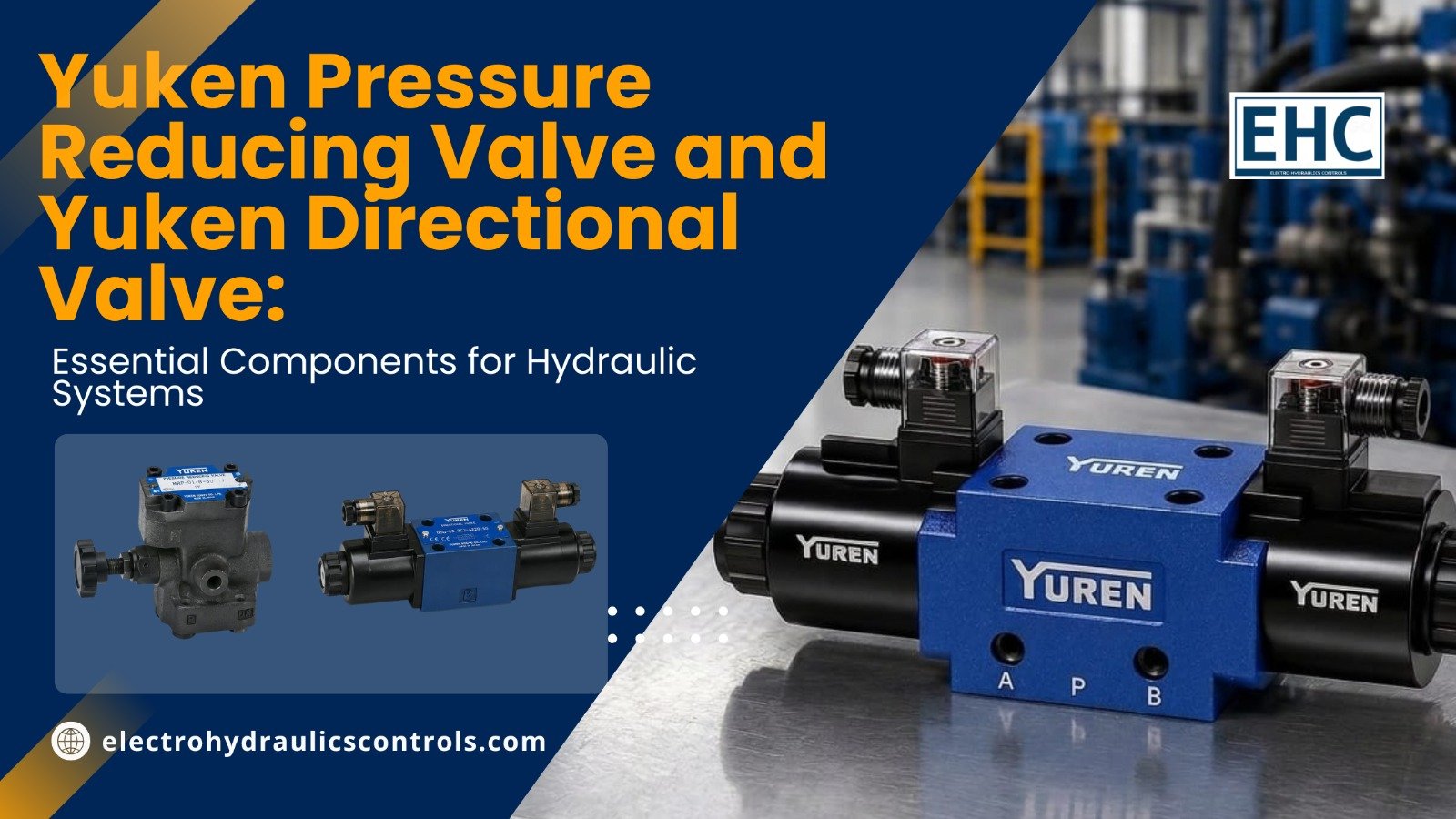
Yuken Pressure Reducing Valve and Yuken Directional Valve: Essential Components for Hydraulic Systems
Safe and efficient operation of hydraulic systems depends on accurate pressure and fluid management. Yuken pressure reducing valve is used for regulating pressure in a particular section of the hydraulic circuit, whereas a Yuken directional valve manages the direction of flow of hydraulic fluid. Although these two valves belong to the category of hydraulic control components, they have distinct roles and are frequently used in combination in hydraulic systems.
Industrial machinery and other high-performance equipment use hydraulic products from Yuken that include pressure and directional control valves. Choosing the right valve involves taking into account factors such as pressure, flow, circuit configuration, actuator specifications, and other conditions.
What Is a Yuken Pressure Reducing Valve?
A pressure reducing valve allows keeping low controlled pressure in the secondary circuit, although the pressure in the main hydraulic system is much higher. Such a solution may be required when different components in one hydraulic system require different pressures.
For instance, a hydraulic machine might require a circuit to operate at a higher pressure than an actuator or control circuit. A pressure reducing valve acts as a separator between the two, protecting any downstream components from excess pressure.
The range of pressure control valves from Yuken includes pressure reducing valves that are intended for use in hydraulic circuits where there is a need for controlled secondary pressure. The choice of the valve depends on pressure range, flow capacity, connections, and application.
What Is a Yuken Directional Valve?
A directional valve regulates the direction of hydraulic fluid in a circuit. This type of valve can control the connection between the ports in order to direct the pressurized hydraulic fluid into a cylinder or motor and then back to the reservoir.
Directional valves come in various types based on different configurations and operation methods, including manual, mechanical, hydraulic, or electrical operation using solenoids.
This type of valve is crucial in equipment requiring a cylinder extension and retraction or movement of the hydraulic motor in a certain direction.
Advantages of Yuken Hydraulic Valves
There are many benefits to using hydraulic valves properly:
– Precise regulation of hydraulic pressure and fluid.
– Protection of sensitive downstream parts.
– Smooth working of hydraulic cylinders and motors.
– Better control of machine operations.
– Higher reliability of the hydraulic system.
– Lower risks of component damages due to pressure.
– Good choice for industrial and heavy duty hydraulic applications.
– Variety of designs for specific requirements of circuits.
Pressure and Direction Control: How It Works
A hydraulic system transfers force via fluid under pressure. The pressure in the circuit determines the force that is transmitted to an actuator, whereas the direction of fluid movement determines its motion.
Pressure reducing valve reacts to downstream pressure, regulating the flow to ensure the right secondary pressure. Once downstream pressure has reached the required level, the internal passage of the valve is adjusted to avoid exceeding the desired pressure.
Directional valve operates in a different way. Spool or other controlling device of the valve changes the position of ports, determining the direction of hydraulic fluid flow towards, from, or blockage of an actuator.
Knowledge of these principles aids engineers in picking the correct valve for the respective segment of the hydraulic circuit.
Steps in Choosing the Correct Valves
Step 1: Identify the Required Function
Decide which function you require in terms of pressure reduction and/or directional control. These valves cannot be interchanged since their functions differ.
Step 2: Check Operating Pressure
Determine the highest pressure in the system and the needed pressure settings. In case of pressure reducing valves, identify the lowest pressure setting.
Step 3: Check Flow Requirement
This is the required hydraulic flow rate in the system. The wrong flow rate may lead to pressure loss.
Step 4: Determine Valve Configuration
These factors include port sizes, mounting type, actuation, valve configuration, and compatibility with the existing hydraulic circuitry.
Step 5: Obtain the Valve from the Right Supplier
Choose a reliable supplier who deals in original Yuken hydraulic components.
Pressure Reducing Valve vs Directional Valve
Features| Pressure Reducing Valve| Directional Valve
Functionality| Downstream pressure control| Fluid direction control
Main Aim| Lower secondary pressure maintenance| Fluid path control to required circuit paths
Main Use Cases| Low-pressure circuit protection| Cylinder and motor control
Key Control Factor| Pressure level setting| Spool/port positioning
Application Areas| Pressure sensitive hydraulic circuits| Actuators movement control
Applications
Yuken hydraulic valves have a variety of possible applications for industrial systems, such as manufacturing machines, hydraulic presses, construction equipment, agricultural equipment, material handling equipment, and automation systems in industry.
A pressure reducing valve may be needed in cases when various parts of a hydraulic circuit require different pressure levels. Directional valves can be used everywhere in cases when there is a need to control actuators movements.
Advantages of Yuken Hydraulic Valves
Yuken has been present on the hydraulic market for quite a long time and has developed a large product line for hydraulic controls. The company produces a full line of pressure, flow, and directional hydraulic control valves and enables the engineers to choose necessary components depending on hydraulic circuit requirements.
While purchasing hydraulic components, it is equally important to pay attention to product compatibility as to the manufacturer.
Frequently Asked Questions
- What is the function of a pressure reducing valve?
It reduces and maintains the pressure in a particular downstream part of the hydraulic system at the needed reduced value.
- What is the role of the directional valve?
It regulates the flow of the fluid and its direction in order to control the movement of actuators like cylinders and motors.
- Can these two valves be used together in one hydraulic system?
Yes. These valves have different tasks and can be used simultaneously if needed in a particular hydraulic circuit.
- How do I select the proper Yuken valve?
Think of the operating pressure, flow, valve structure, port diameter, actuating mechanism, mounting features and the particular needs of the hydraulic circuit.
Conclusion
A good hydraulic control system needs not only proper pressure management but also control over the fluid movement. A pressure reducing valve can protect the downstream circuits by maintaining the required pressure level, while the yuken directional valve are responsible for the movement of hydraulic actuators. Choosing the right Yuken directional valve or the pressure control component depending on the system’s characteristics may help achieve proper hydraulic performance.


Add comment