
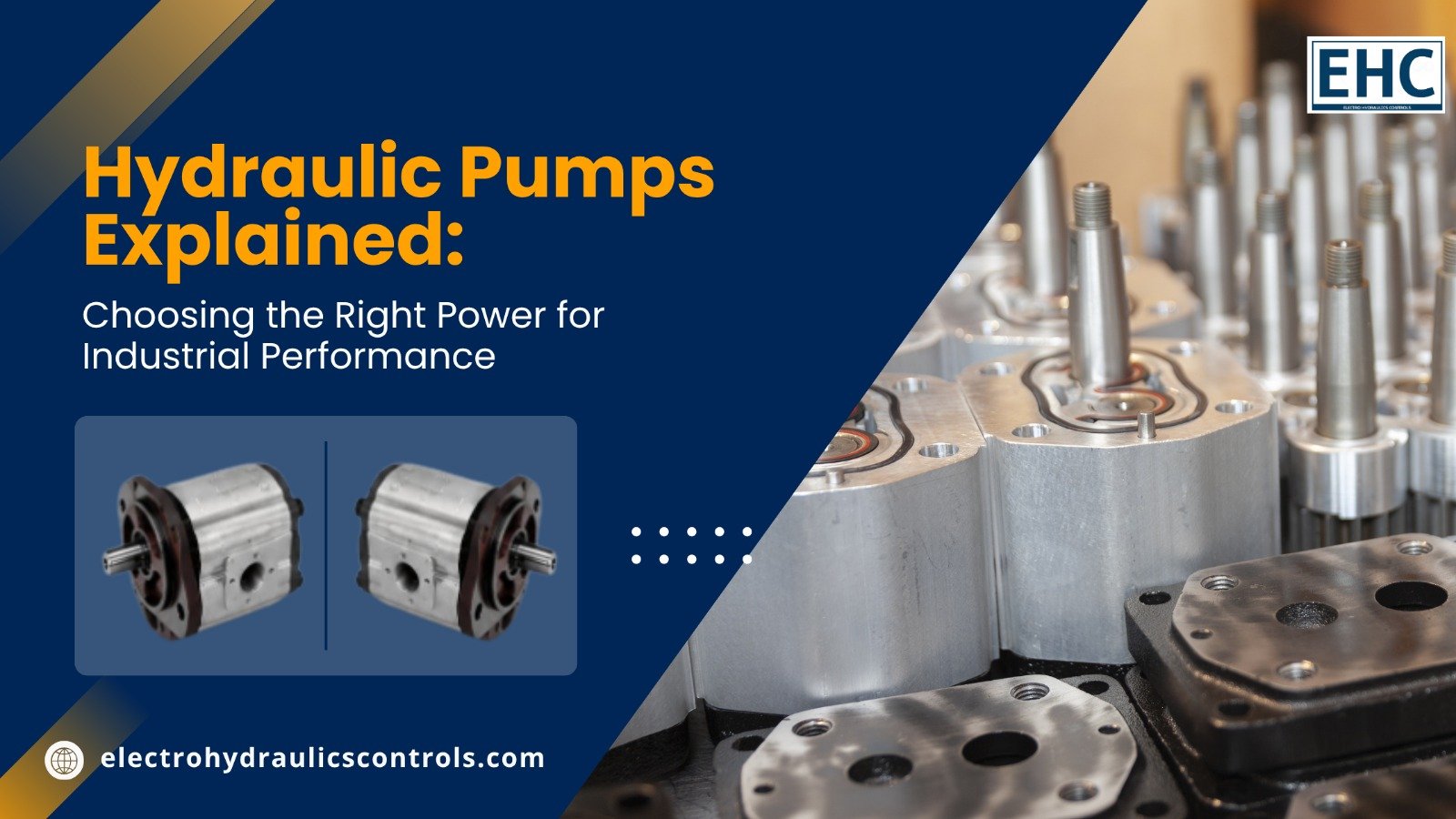
Hydraulic Pumps Explained: Choosing the Right Power for Industrial Performance
In industrial machinery, performance often depends on components that operate behind the scenes. Hydraulic pumps are among the most important because they convert mechanical energy into hydraulic energy, enabling equipment to lift loads, operate cylinders, and control machinery with precision.
However, not every hydraulic application demands the same pump design. Factors such as operating pressure, flow requirements, efficiency, and duty cycle influence the right choice. Understanding options such as an Eaton hydraulic gear pump and a Polyhydron radial piston pump can help engineers and maintenance teams identify suitable solutions for their systems.
Eaton Hydraulic Gear Pump: Reliable Power for Everyday Operations
Gear pumps are widely used in hydraulic systems because of their relatively simple construction and dependable operation. They use rotating gears to move hydraulic fluid from the inlet to the outlet, supplying flow to connected equipment.
An Eaton hydraulic gear pump may be worth considering for applications that require a compact hydraulic power source and consistent fluid delivery.
Common application areas for gear pumps include:
- Industrial machinery and material-handling equipment
- Agricultural and mobile hydraulic systems
- Hydraulic power packs
- Equipment requiring reliable fluid circulation and actuation
When selecting a pump, check its displacement, operating speed, pressure rating, fluid compatibility, mounting arrangement, and shaft configuration. These specifications determine whether the pump is suitable for the intended system.
Correct fluid selection, filtration, and routine maintenance are also important for reducing wear and supporting reliable operation.
Polyhydron Radial Piston Pump: Designed for Demanding Pressure Requirements
Radial piston pumps use pistons arranged radially around a central axis to move hydraulic fluid. Depending on the design, they can support high-pressure applications where precise hydraulic performance is essential.
A Polyhydron radial piston pump may be relevant when evaluating hydraulic solutions for demanding industrial processes. However, suitability depends on the exact model and the operating conditions of the equipment.
Potential application areas for radial piston pumps include specialised industrial hydraulic systems, hydraulic presses, clamping equipment, and other machinery requiring high-pressure fluid delivery.
Before selecting a pump, evaluate its rated and maximum operating pressure, displacement, flow requirements, control characteristics, and compatibility with the existing hydraulic circuit.
Eaton Gear Pump vs Polyhydron Radial Piston Pump
Although both pump types transfer hydraulic fluid, their operating principles and ideal applications can differ.
| Feature | Eaton hydraulic gear pump | Polyhydron radial piston pump |
| Operating principle | Rotating gears move fluid | Radially arranged pistons move fluid |
| Typical strength | Relatively simple, compact construction | Suitable for demanding pressure requirements, depending on model |
| Selection priorities | Flow, speed, pressure, and mounting | Pressure, displacement, flow, and control requirements |
| Maintenance considerations | Fluid cleanliness, seals, and gear wear | Fluid cleanliness, piston components, seals, and model-specific servicing |
Neither option is universally better. The right pump depends on the system’s pressure and flow requirements, efficiency targets, operating environment, and maintenance constraints.
Frequently Asked Questions
- What is an Eaton hydraulic gear pump used for?
It is used to supply hydraulic fluid in compatible industrial, agricultural, and mobile hydraulic applications. Exact capabilities depend on the model.
- What makes a radial piston pump different from a gear pump?
A gear pump moves fluid using rotating gears, whereas a radial piston pump uses reciprocating pistons. Their pressure capabilities and operating characteristics vary by design.
- How do I select the correct hydraulic pump?
Check required flow, operating pressure, speed, displacement, fluid type, mounting dimensions, and compatibility with the hydraulic system.
- How can hydraulic pump service life be improved?
Use the recommended hydraulic fluid, maintain appropriate filtration, prevent contamination, monitor operating temperature, and follow the manufacturer’s maintenance schedule.
Find the Right Hydraulic Solution for Your Application
Choosing a hydraulic pump requires more than comparing product names. Understanding the machinery, pressure requirements, flow rate, and operating conditions is essential for making a technically sound decision.
Explore the Eaton hydraulic gear pump and Polyhydron radial piston pump options through Electro Hydraulics & Controls to investigate suitable hydraulic solutions for your industrial requirements.
About the Author
Electro Hydraulics & Controls Content Team
The Electro Hydraulics & Controls Content Team shares educational resources on hydraulic equipment, industrial fluid power systems, component selection, and maintenance practices to help professionals make informed technical decisions.



Add comment