
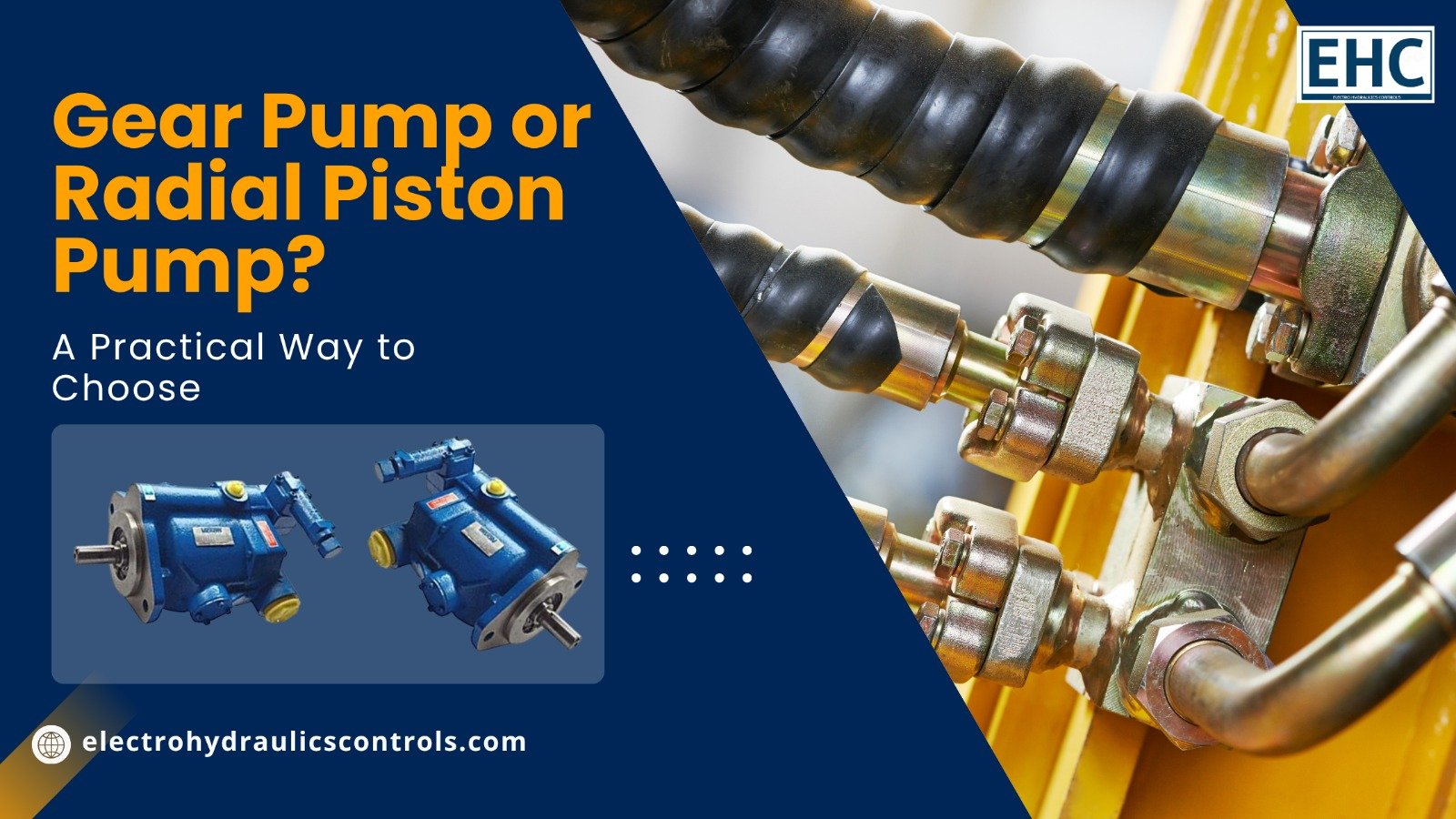
Gear Pump or Radial Piston Pump? A Practical Way to Choose
A hydraulic system is only as reliable as the pump that feeds it. Choose the wrong type and you end up with excess heat, early wear, or insufficient pressure when the machine needs it most. Two of the most common fixed-displacement options- gear pumps and radial piston pumps solve different problems. Understanding the real differences makes the selection process far less guesswork.
Many moderate-pressure circuits still rely on an eaton hydraulic gear pump because of its simplicity and cost-effectiveness. When continuous high pressure is required, a polyhydron radial piston pump often becomes the stronger long-term choice.
How Each Pump Moves Fluid
A gear pump uses two meshing gears inside a close-fitting housing. Fluid is carried in the pockets between the gear teeth from the inlet side to the outlet. The design is straightforward, compact, and relatively tolerant of dirt in the oil. Flow is fixed for a given shaft speed and the pressure range is typically medium.
A radial piston pump places several pistons in a circle around a central cam or eccentric. As the shaft turns, each piston strokes in and out, drawing oil in and pushing it out under pressure. Valve-controlled versions have no preferred direction of rotation and can often be mounted submerged or above the oil level. The result is higher pressure capability and better efficiency once the system pressure climbs.
Side-by-Side Comparison
| Feature | Gear Pump | Radial Piston Pump |
| Typical continuous pressure | Up to ~210–276 bar | Up to 350–550 bar |
| Displacement | Fixed | Fixed (multiple element options) |
| Efficiency at high pressure | Drops as pressure rises | Remains high |
| Contamination tolerance | Good | Moderate (needs cleaner oil) |
| Noise & pulsation | Moderate | Lower |
| Relative cost | Lower | Higher |
| Best suited for | Moderate pressure, simpler circuits | High continuous pressure, efficiency-focused |
This table highlights the core trade-offs. Neither design is universally better; each has a clear operating window where it performs best.
Pressure, Efficiency, and Real-World Behaviour
Gear pumps deliver reliable flow in the low-to-medium pressure band and keep working even when oil cleanliness is not perfect. Their volumetric efficiency is acceptable at lower pressures but declines as internal leakage increases with rising pressure. That leakage turns into heat, which can force larger coolers or shorter oil-change intervals.
Radial piston pumps maintain higher volumetric and overall efficiency at elevated pressures because the pistons seal more effectively against the cam or cylinder. Less energy is wasted as heat, which matters on machines that run for long hours. The trade-off is greater sensitivity to fluid cleanliness and viscosity. Proper filtration becomes non-negotiable.
Where Each Pump Is Typically Used
Gear pumps appear frequently in:
- Agricultural and material-handling equipment
- Steering, cooling-fan, and auxiliary circuits
- Open-center systems that do not demand extreme pressure
- Cost-sensitive applications where contamination tolerance is useful
Radial piston pumps are more common in:
- High-pressure industrial presses and clamping systems
- Test stands and high-force actuators
- Mobile equipment that needs sustained high pressure
- Installations that benefit from submerged or above-tank mounting
The pattern is consistent: moderate pressure and simpler duty cycles favor gear pumps; continuous high pressure and efficiency under load favor radial piston designs.
How to Decide Without Overcomplicating It
Start with the continuous and peak pressure the circuit actually needs. If the system stays comfortably below 200–250 bar, a well-specified gear pump is usually sufficient and more economical. Once continuous pressure rises above that range, the radial piston design generally becomes the more durable and efficient option.
Next examine duty cycle. Intermittent or light-duty operation suits the simpler gear pump. Continuous high-pressure work rewards the radial piston pump’s better efficiency and mechanical robustness.
Fluid condition also influences the decision. Gear pumps forgive moderate contamination better. Radial piston pumps deliver their full life only when the oil is kept clean (typically ISO 4406 20/18/15 or better) and viscosity stays within the recommended band.
Finally consider installation constraints. Some radial piston models are designed specifically for submerged mounting or external mounting above the oil level, which can simplify reservoir layout.
Maintenance Realities
Gear pumps are generally easier and cheaper to replace when they wear. Many users simply exchange the complete unit. Radial piston pumps can be more modular—individual elements or valves are sometimes renewable—but they demand consistent filtration and oil quality to reach their design life.
In both cases, rising noise, increased case drain flow, or unusual temperature rise are early warning signs worth investigating before a complete failure occurs.
FAQs
Can a gear pump safely replace a radial piston pump?
Only if the continuous pressure and duty cycle stay inside the gear pump’s rating. Running a gear pump at sustained high pressure shortens its life and reduces efficiency.
Is the higher cost of a radial piston pump justified?
In continuous high-pressure applications, yes better efficiency and longer service life under load often offset the higher purchase price.
Do both pumps need the same oil cleanliness?
No. Gear pumps are more tolerant of moderate contamination. Radial piston pumps perform best with cleaner fluid and consistent filtration.
Can either pump vary its flow?
Both are fixed-displacement. Flow changes only with shaft speed. Variable flow requires a variable-displacement pump or external flow control.
Conclusion
The right pump is the one that matches the real pressure, duty cycle, fluid condition, and installation needs of the system. Gear pumps remain a practical, cost-effective solution for many moderate-pressure circuits. Radial piston designs become the better match when continuous high pressure and efficiency under load matter most.
An eaton hydraulic gear pump continues to serve steady, moderate-pressure applications reliably and economically. When the circuit demands higher continuous pressure and better efficiency, a polyhydron radial piston pump offers a rugged, valve-controlled option that has proven effective across industrial and mobile systems. Matching the technology to the actual operating conditions remains the most reliable route to consistent performance and acceptable service life.
Meta Title:
Gear Pump vs Radial Piston Pump: How to Choose the Right One
Meta Description:
Practical comparison of gear pumps and radial piston pumps. See pressure limits, efficiency, applications, and a clear selection guide for hydraulic systems.
Author’s Bio:
Electro Hydraulics Controls Team
Electro Hydraulics Controls supplies industrial hydraulic pumps, motors, valves, and related components, including Dowty gear pumps and compatible replacements for maintenance and OEM applications.

Add comment