
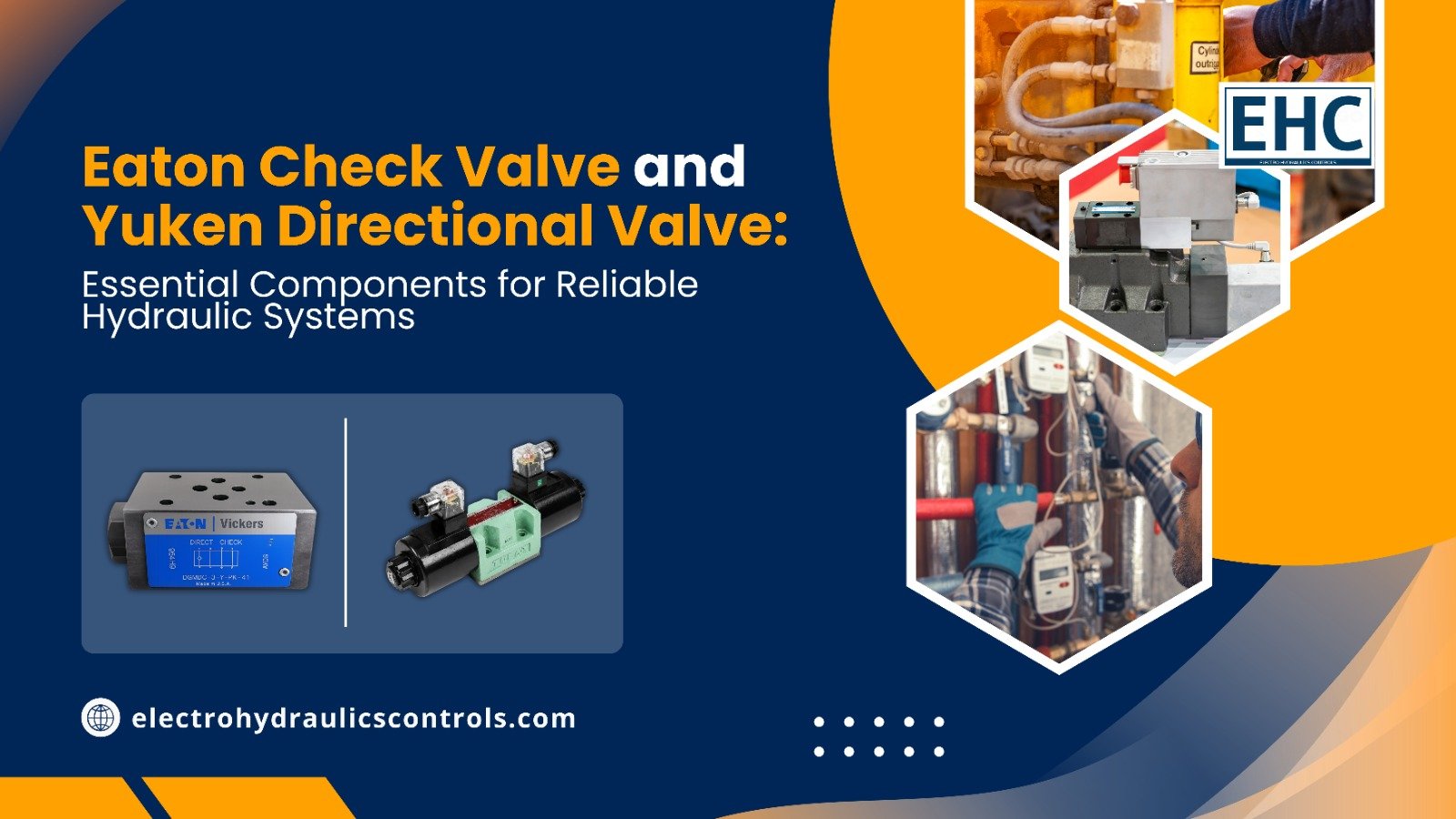
Eaton Check Valve and Yuken Directional Valve: Essential Components for Reliable Hydraulic Systems
An Eaton check valve prevents hydraulic fluid from flowing in the reverse direction, protecting pumps and maintaining system pressure. A Yuken directional valve controls the direction of hydraulic fluid, enabling precise movement of cylinders and hydraulic motors. Together, these components improve efficiency, reliability, and operational safety in industrial hydraulic systems.
Eaton Check Valve and Yuken Directional Valve: A Complete Guide
Hydraulic systems rely on precision-engineered components to maintain efficiency, control, and safety. Two of the most important elements in any hydraulic circuit are the Eaton check valve and the Yuken directional valve. While one ensures unidirectional fluid flow, the other manages the direction of hydraulic fluid to control actuators and motors.
Industries such as manufacturing, construction, mining, steel processing, agriculture, and material handling depend on these hydraulic components for consistent performance under demanding operating conditions.
What is an Eaton Check Valve?
An Eaton check valve is a hydraulic valve specifically designed to allow fluid to flow in one direction while preventing reverse flow. This simple yet highly effective component protects hydraulic equipment from pressure surges, backflow, and potential damage.
Check valves operate automatically without requiring external control. They open when forward pressure exceeds the cracking pressure and close immediately when reverse pressure occurs.
These valves are widely used in hydraulic power units, industrial machinery, mobile equipment, and high-pressure hydraulic circuits.
Key Features of Eaton Check Valve
High Pressure Capability
Designed to withstand demanding hydraulic applications with reliable sealing performance.
Reverse Flow Prevention
Protects hydraulic pumps and system components by blocking unwanted backflow.
Low Pressure Drop
Optimized internal design minimizes energy loss while maintaining smooth hydraulic flow.
Long Service Life
Manufactured using durable materials that resist wear, corrosion, and high operating pressures.
Compact Construction
Easy to install in new hydraulic systems as well as retrofit applications.
What is a Yuken Directional Valve?
A Yuken directional valve is a hydraulic control valve that regulates the direction of fluid flow throughout a hydraulic system. It determines whether hydraulic cylinders extend, retract, stop, or hold their position.
Directional valves are available in manual, hydraulic, pneumatic, and electrically operated versions, making them suitable for a wide variety of industrial automation and heavy-duty hydraulic applications.
Yuken directional valves are recognized for their precision engineering, dependable operation, and excellent flow control characteristics.
Key Features of Yuken Directional Valve
Accurate Flow Control
Provides precise routing of hydraulic oil for smooth actuator movement.
Fast Response
Enables quick switching between hydraulic functions to improve productivity.
Durable Construction
Built to perform consistently in high-pressure industrial environments.
Multiple Configurations
Available in various spool designs and mounting options for different hydraulic circuits.
Low Internal Leakage
Improves efficiency while maintaining stable hydraulic pressure.
Definition of Hydraulic Flow Control Components
Hydraulic flow control components are devices that regulate the movement, pressure, and direction of hydraulic fluid within a hydraulic circuit. Check valves primarily control flow direction by preventing reverse movement, whereas directional valves determine the operational movement of hydraulic actuators.
Together, they create safe, efficient, and highly responsive hydraulic systems.
Benefits of Using Eaton Check Valve and Yuken Directional Valve Together
Improved System Protection
The Eaton check valve prevents reverse flow that could otherwise damage pumps, actuators, and other hydraulic components.
Better Motion Control
The Yuken directional valve allows precise control over cylinders and motors, ensuring accurate machine operation.
Enhanced Hydraulic Efficiency
Proper fluid routing minimizes energy loss while maintaining stable operating pressure.
Increased Equipment Reliability
Using high-quality hydraulic valves reduces downtime and extends equipment life.
Reduced Maintenance Costs
Reliable hydraulic components experience less wear, resulting in fewer repairs and lower maintenance expenses.
Improved Safety
Controlled hydraulic flow minimizes unexpected movements and protects operators as well as machinery.
Step-by-Step Guide to Selecting the Right Hydraulic Valves
Step 1: Identify System Pressure
Determine the maximum operating pressure before selecting any hydraulic valve.
Step 2: Calculate Required Flow Rate
Ensure both valves can safely handle the hydraulic flow demanded by the application.
Step 3: Select Proper Valve Size
Choose valves with appropriate port sizes to prevent unnecessary pressure losses.
Step 4: Consider Operating Environment
Evaluate factors such as temperature, contamination levels, vibration, and humidity.
Step 5: Verify Compatibility
Confirm compatibility with hydraulic fluids, seals, mounting styles, and system configurations.
Step 6: Perform Regular Maintenance
Inspect valves periodically for contamination, leakage, wear, and proper operation to maximize service life.
Common Industrial Applications
The combination of Eaton check valves and Yuken directional valves is widely used across industries, including:
- Industrial manufacturing
- Hydraulic presses
- CNC machinery
- Construction equipment
- Agricultural machinery
- Steel plants
- Plastic injection molding machines
- Mining equipment
- Marine hydraulic systems
- Material handling equipment
Why Quality Hydraulic Valves Matter
Hydraulic systems operate under extremely high pressures where even minor flow irregularities can reduce efficiency or damage equipment. High-quality valves provide consistent performance, accurate control, and long-term durability.
Properly selected hydraulic valves help improve production efficiency, reduce energy consumption, and minimize costly equipment failures.
Maintenance Tips
Keep Hydraulic Oil Clean
Contaminated oil is one of the leading causes of valve failure.
Inspect for Leakage
Regular inspections help identify worn seals before major problems occur.
Monitor Operating Pressure
Operating outside recommended pressure limits can shorten valve life.
Replace Damaged Components
Prompt replacement of worn parts prevents further system damage.
Follow Manufacturer Maintenance Guidelines
Routine preventive maintenance ensures reliable long-term performance.
Frequently Asked Questions
What is the primary purpose of an Eaton check valve?
Its primary function is to allow hydraulic fluid to flow in one direction while preventing reverse flow that could damage hydraulic equipment.
What does a Yuken directional valve control?
It controls the direction of hydraulic fluid, allowing cylinders and hydraulic motors to extend, retract, or stop as required.
Can both valves be used in the same hydraulic system?
Yes. They perform different but complementary functions and are commonly used together in industrial hydraulic circuits.
Which industries commonly use these valves?
Manufacturing, construction, mining, agriculture, marine, steel processing, and industrial automation all rely on these hydraulic components.
How often should hydraulic valves be inspected?
Routine inspections should be performed according to operating conditions and maintenance schedules, with more frequent checks in demanding industrial environments.
Conclusion
The Eaton check valve and Yuken directional valve are essential components for achieving efficient, reliable, and safe hydraulic system performance. While the check valve protects equipment by preventing reverse fluid flow, the directional valve provides precise control over hydraulic motion. Together, they contribute to improved productivity, reduced maintenance costs, and longer equipment life across a wide range of industrial applications. Investing in high-quality hydraulic valves and maintaining them properly ensures dependable performance and maximum operational efficiency.


Add comment