
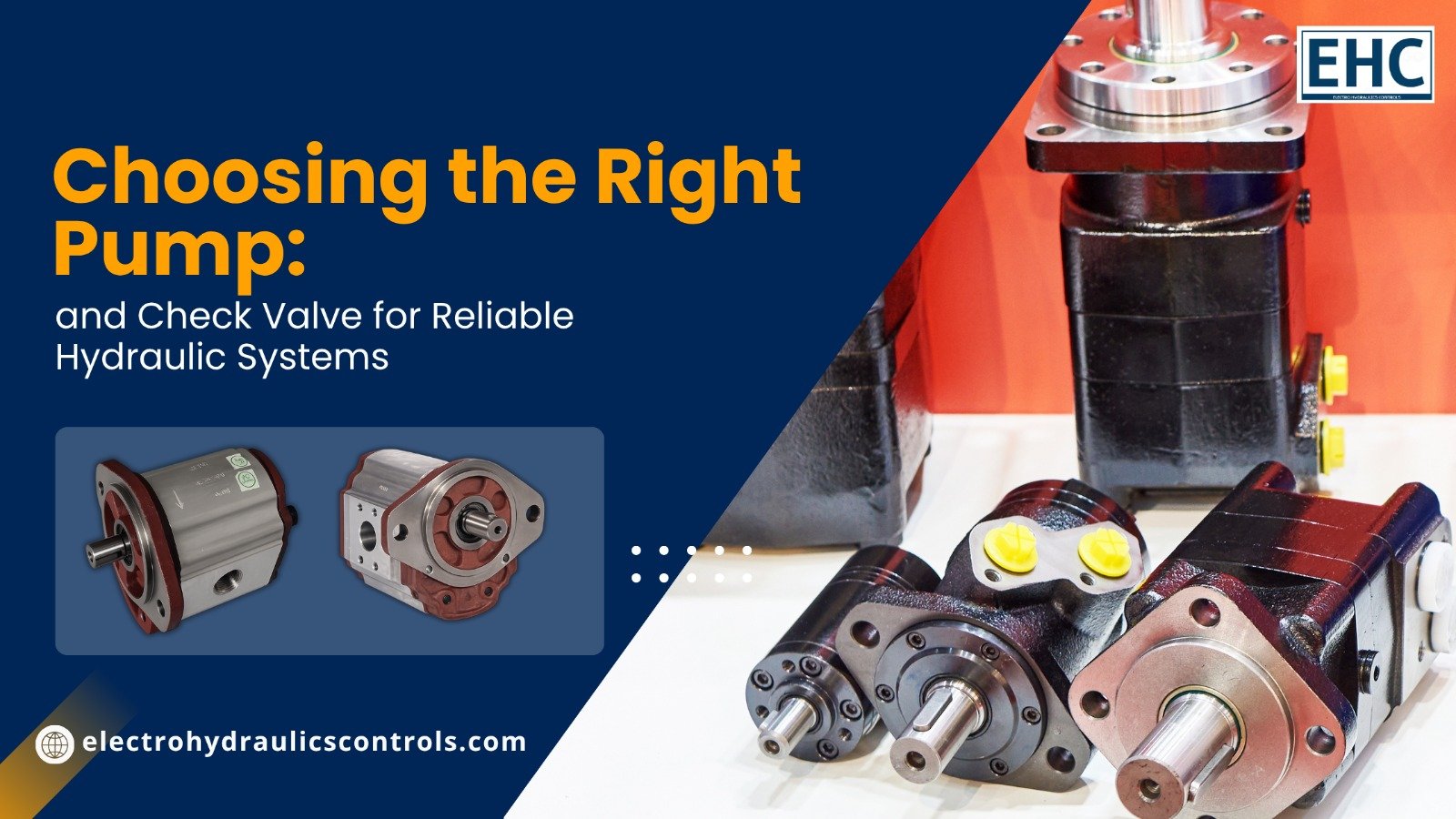
Choosing the Right Pump and Check Valve for Reliable Hydraulic Systems
Hydraulic systems fail or underperform for surprisingly ordinary reasons. The wrong pump displacement or pressure rating. A check valve that does not hold load properly. Contamination that shortens component life. When engineers look for a yuken piston pump or a compatible check valve, they are usually trying to solve a concrete problem: deliver the required flow and pressure efficiently, protect the circuit, and keep downtime low.
Yuken axial piston pumps are widely used because they offer variable displacement, solid efficiency and relatively quiet operation across a range of industrial pressures. Eaton-style check valves (and equivalent designs) serve a different but equally critical role: allowing free flow in one direction while blocking reverse flow until pilot pressure or system conditions permit it.
What a Piston Pump Actually Contributes
Axial piston pumps convert rotary input into hydraulic flow by means of pistons arranged around a swash plate or similar mechanism. Variable-displacement versions let the system adjust output to match demand, which reduces energy waste and heat compared with fixed-displacement pumps running at full output all the time.
Yuken’s range includes several series suited to different pressure and flow needs. Lower-noise compact models work well in machine tools and smaller industrial equipment. Higher-pressure series handle heavier continuous duty in presses, injection moulding, metallurgy and mobile equipment. Selection typically starts with required flow at operating pressure, available drive speed, mounting style and control method (pressure compensator, load sensing, remote control, etc.).
Noise, efficiency at partial load, and compatibility with the existing fluid and filtration setup matter more in real plants than brochure peak numbers.
Why Check Valves Matter More Than They Appear
A check valve looks simple. It allows flow one way and blocks the other. In practice it prevents reverse rotation of pumps, holds loads on cylinders, protects against back-flow during pressure spikes, and enables certain circuit functions such as pilot-operated unlocking.
Eaton (and similar) check valves come in direct-acting and pilot-operated forms. Direct-acting types open when inlet pressure exceeds cracking pressure and reseat when flow tries to reverse. Pilot-operated versions stay locked until a pilot signal unseats them, which is useful for load-holding applications where the load must stay in position until intentionally released.
Cracking pressure, flow capacity, leakage rate when closed, and material compatibility with the hydraulic fluid are the practical selection points. A valve that leaks under load or chatters under certain flow conditions creates problems that are hard to diagnose later.
How the Two Components Interact in a Circuit
A typical industrial power unit uses a piston pump to generate flow and pressure. Check valves appear in several places: on the pump outlet to prevent reverse flow, in cylinder lines for load holding, and sometimes in pilot circuits. When the pump is variable-displacement and pressure-compensated, the check valve on the outlet still protects against reverse flow if the system pressure falls or the pump is stopped.
Contamination is the shared enemy. Both piston pumps and precision check valves suffer when fluid cleanliness is poor. Proper filtration, regular fluid analysis and correct reservoir design extend the life of both.
Practical Selection Considerations
| Factor | Piston Pump Focus | Check Valve Focus |
| Primary duty | Flow and pressure generation | Directional flow control/load holding |
| Key rating | Displacement, continuous pressure, speed | Cracking pressure, max flow, leakage |
| Control options | Pressure compensator, load sensing, remote | Direct-acting or pilot-operated |
| Common failure modes | Contamination, cavitation, overheating | Contamination, incorrect cracking pressure |
| Installation note | Correct suction conditions critical | Orientation and pilot line routing matter |
Matching the pump’s output characteristics to the circuit’s actual demand, then selecting a check valve that can handle the resulting pressures and flows without excessive leakage, produces more reliable systems than simply choosing the highest-rated catalogue item.
Frequently Asked Questions
When is a variable-displacement piston pump worth the extra cost?
When the machine spends significant time at partial load or when heat generation and energy use are concerns. Fixed pumps are simpler and often adequate for constant-duty applications.
Can any check valve be used for load holding?
No. Pilot-operated designs are preferred when the load must remain locked until deliberately released. Direct-acting valves may allow creep under sustained load depending on leakage characteristics.
How important is fluid cleanliness?
Critical for both components. Piston pumps and tight-sealing check valves are sensitive to particulate contamination. Maintaining the recommended cleanliness level is one of the highest-return maintenance practices.
What should be checked first when a system loses performance?
Suction conditions for the pump, fluid condition and temperature, and whether any check valve is allowing reverse flow or failing to hold load. Many “pump problems” originate elsewhere in the circuit.
A Straightforward Approach
Reliable hydraulic performance comes from matching components to the real duty cycle rather than over-specifying. A properly selected eaton check valve protects the circuit and holds loads as intended. A well-matched piston pump delivers the required flow without unnecessary energy loss or heat. When both are chosen with the same attention to pressure, flow, fluid condition and installation details, the system tends to run longer between interventions.
Start with the actual operating pressure and flow demand, confirm suction and filtration conditions, then select the pump and check valve that fit those requirements. The rest of the circuit becomes easier to design and maintain.
Meta Title:
Yuken Piston Pump & Eaton Check Valve | Practical Selection Guide
Meta Description:
Clear guidance on selecting Yuken piston pumps and Eaton check valves for industrial hydraulic systems roles, key ratings, common issues and practical matching advice.
Author Bio:
Electro Hydraulics Controls Team
Electro Hydraulics Controls supplies industrial hydraulic pumps, motors, valves, and related components, including Dowty gear pumps and compatible replacements for maintenance and OEM applications.
Add comment