
Available on backorder

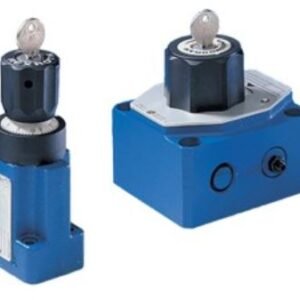
REXROTH , 2-way flow control valves, pressure compensated (2FRM 6 B 36-2X/ 6QRV-IN001)
£352.80
Pressure compensated flow controls Model 2FRM are two-way restrictive-style flow regulators. They accurately control flow, independent of changes in fluid viscosity or pressure drop across the valve. This valve maintains a constant actuator speed independent of changes in load-induced pressure. Sharp edged throttle openings reduce the influence of flow variations from temperature change.
Available on backorder
REXROTH , 2-way flow control valves, pressure compensated (2FRM 6 B 36-2X/10QRV-IN001)
£352.80
Pressure compensated flow controls Model 2FRM are two-way restrictive-style flow regulators. They accurately control flow, independent of changes in fluid viscosity or pressure drop across the valve. This valve maintains a constant actuator speed independent of changes in load-induced pressure. Sharp edged throttle openings reduce the influence of flow variations from temperature change.
Available on backorder
REXROTH , 2-way flow control valves, pressure compensated (2FRM 6 B 36-2X/16QRV-IN001)
£352.80
Pressure compensated flow controls Model 2FRM are two-way restrictive-style flow regulators. They accurately control flow, independent of changes in fluid viscosity or pressure drop across the valve. This valve maintains a constant actuator speed independent of changes in load-induced pressure. Sharp edged throttle openings reduce the influence of flow variations from temperature change.
Available on backorder
REXROTH , 2-way flow control valves, pressure compensated (2FRM 6 B 36-2X/25QRV-IN001)
£352.80
Pressure compensated flow controls Model 2FRM are two-way restrictive-style flow regulators. They accurately control flow, independent of changes in fluid viscosity or pressure drop across the valve. This valve maintains a constant actuator speed independent of changes in load-induced pressure. Sharp edged throttle openings reduce the influence of flow variations from temperature change.
Available on backorder
REXROTH , 2-way flow control valves, pressure compensated (2FRM 6 B 36-2X/32QRV-IN001)
£352.80
Pressure compensated flow controls Model 2FRM are two-way restrictive-style flow regulators. They accurately control flow, independent of changes in fluid viscosity or pressure drop across the valve. This valve maintains a constant actuator speed independent of changes in load-induced pressure. Sharp edged throttle openings reduce the influence of flow variations from temperature change.
Available on backorder
Sale
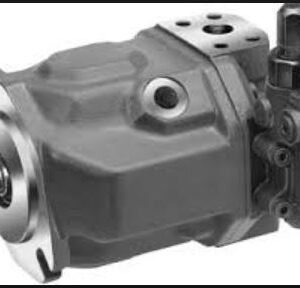
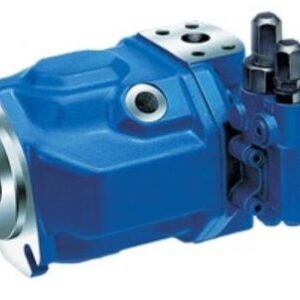
REXROTH A10VSO PISTON PUMP (A10VSO 28 DFR 31 R P S A 12)
£4,050.00
DFR – Pressure and flow control
In addition to the pressure control function, the pump flow may be varied by means of a differential pressure over an orifice or valve spool installed in the service line to the actuator. The pump flow is equal to the actual required flow by the actuator, regardless of changing pressure levels. The pressure control overrides the flow control function.
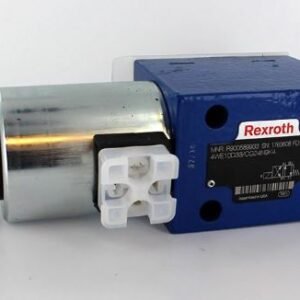
REXROTH Directional Control Valve (4WE 10 C/3X G24 N9 K4)
£288.00
Directional control valves Model WE 6 are solenoid operated directional spool valves. They control the start, stop and direction of flow.
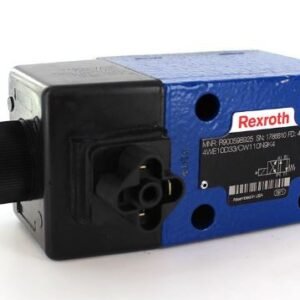
REXROTH Directional Control Valve (4WE 10 C/3X W230 N9 K4)
£291.60
Directional control valves Model WE 6 are solenoid operated directional spool valves. They control the start, stop and direction of flow.
REXROTH Directional Control Valve (4WE 10 D 3X/OFC G24 N9 K4)
£460.80
Directional control valves Model WE 6 are solenoid operated directional spool valves. They control the start, stop and direction of flow.
REXROTH Directional Control Valve (4WE 10 D 3X/OFC W230 N9 K4)
£475.20
Directional control valves Model WE 6 are solenoid operated directional spool valves. They control the start, stop and direction of flow.
REXROTH Directional Control Valve (4WE 10 D/3X G24 N9 K4)
£288.00
Directional control valves Model WE 6 are solenoid operated directional spool valves. They control the start, stop and direction of flow.
REXROTH Directional Control Valve (4WE 10 D/3X W230 N9 K4)
£291.60
Directional control valves Model WE 6 are solenoid operated directional spool valves. They control the start, stop and direction of flow.