
Available on backorder

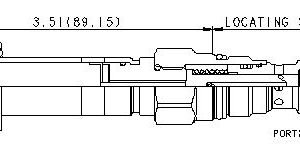
SUN HYDRAULICS 2-way, soft shift, solenoid-operated directional spool valve (DLDASHN)
£738.00
This solenoid-operated 2-way, 2-position cartridge is a direct-acting, balanced spool valve with a soft shift feature. The soft shift feature greatly reduces system shock due to valve actuation. The valve is available in either a normally open or normally closed configuration.
- The soft shift cartridge is interchangeable with the standard cartridge, however, the performance limits are lower.
- The soft shift feature can greatly reduce shock due to valve actuation but should not be counted upon in applications where timing is critical. If you need accurate ramping or timing control, consider Sun's electro-proportional valves.
- The soft shift feature results in significant increase in response time over Sun's standard solenoid. Response time is dependent on flow, pressure, coil voltage, oil viscosity and ambient temperature. Typical response time ranges from 150 ms to 300 ms.
- For consistent soft shift performance, port 1 should be at a positive pressure.
Available on backorder
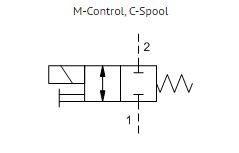
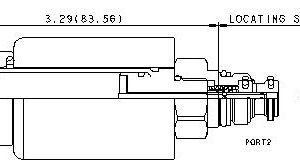
SUN HYDRAULICS 2-way, solenoid-operated directional spool valve – pilot capacity (DAALMCN224)
£1,252.80
This solenoid-operated 2-way, 2-position cartridge is a direct-acting, balanced spool pilot valve used to pilot other full-flow valves. The valve is available in either a normally open or normally closed configuration.
This cartridge can be installed directly into a cavity in the end of many of Sun's pilot operated and ventable valves to provide integrated pilot control.
- Model DAAL integrates the same coil, connector, and manual override options that are currently available on Series 1 valves. The DAAL is interchangeable with the DAAA except for the external coil dimensions and higher coil wattage.
- The solenoid tube assembly is fatigue rated for 5000 psi (350 bar) service.
- This valve is direct actuated and requires no minimum hydraulic pressure for operation.
Available on backorder
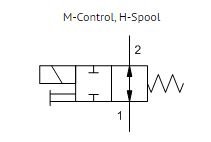
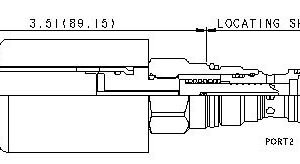
SUN HYDRAULICS 2-way, solenoid-operated directional spool valve (DLDAMHN 212)
£853.20
This solenoid-operated 2-way, 2-position cartridge is a direct-acting, balanced spool directional valve. The valve is available in either a normally open or normally closed configuration.
- The solenoid tube assembly is fatigue rated for 5000 psi (350 bar) service.
- This valve is direct actuated and requires no minimum hydraulic pressure for operation.
- Cartridges configured with EPDM seals are for use in systems with phosphate ester fluids. Exposure to petroleum based fluids, greases and lubricants will damage the seals.
- This cartridge has several manual override choices, including no manual override. See the CONFIGURATION section. Please note: Manual override functionality is not compatible with weatherized coils.
Available on backorder
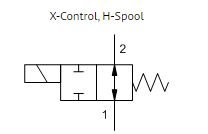
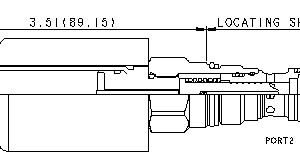
SUN HYDRAULICS 2-way, solenoid-operated directional spool valve (DLDAXHN 224)
£813.60
This solenoid-operated 2-way, 2-position cartridge is a direct-acting, balanced spool directional valve. The valve is available in either a normally open or normally closed configuration.
- The solenoid tube assembly is fatigue rated for 5000 psi (350 bar) service.
- This valve is direct actuated and requires no minimum hydraulic pressure for operation.
- Cartridges configured with EPDM seals are for use in systems with phosphate ester fluids. Exposure to petroleum based fluids, greases and lubricants will damage the seals.
- This cartridge has several manual override choices, including no manual override. See the CONFIGURATION section. Please note: Manual override functionality is not compatible with weatherized coils.
- On models equipped with the D or L control, the detent mechanism in the manual override is meant for temporary actuation. The D, L and T manual control assemblies have a mechanical life expectancy of approximately 7,000 cycles.
Available on backorder
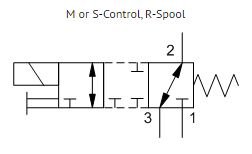
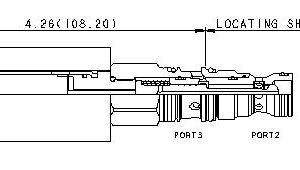
SUN HYDRAULICS 3-way, solenoid-operated directional spool valve (DMDAMRN224)
£651.60
This solenoid-operated 3-way, 2-position cartridge is a direct-acting, balanced spool directional valve.
- The solenoid tube assembly is fatigue rated for 5000 psi (350 bar) service.
- Spools B and R are closed in the transition between their two positions. This results in a higher performance limit at the expense of lower capacity. When used as pilot controls, where capacity is not a factor, the closed transition will provide faster and more consistent response times.
- This valve is direct actuated and requires no minimum hydraulic pressure for operation.
- Cartridges configured with EPDM seals are for use in systems with phosphate ester fluids. Exposure to petroleum based fluids, greases and lubricants will damage the seals.
Available on backorder

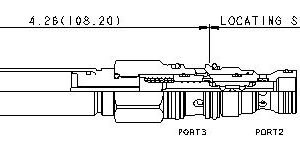
SUN HYDRAULICS 3-way, solenoid-operated directional spool valve (DMDAXPN)
£500.40
This solenoid-operated 3-way, 2-position cartridge is a direct-acting, balanced spool directional valve.
- The solenoid tube assembly is fatigue rated for 5000 psi (350 bar) service.
- Spools B and R are closed in the transition between their two positions. This results in a higher performance limit at the expense of lower capacity. When used as pilot controls, where capacity is not a factor, the closed transition will provide faster and more consistent response times.
- This valve is direct actuated and requires no minimum hydraulic pressure for operation.
- Cartridges configured with EPDM seals are for use in systems with phosphate ester fluids. Exposure to petroleum based fluids, greases and lubricants will damage the seals.
Available on backorder
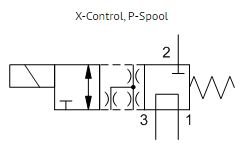
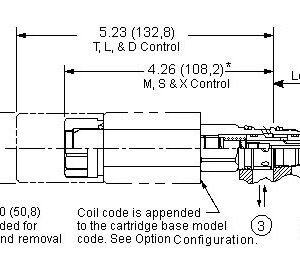
SUN HYDRAULICS 3-way, solenoid-operated directional spool valve (DMDAXPN224)
£651.60
This solenoid-operated 3-way, 2-position cartridge is a direct-acting, balanced spool directional valve.
- The solenoid tube assembly is fatigue rated for 5000 psi (350 bar) service.
- Spools B and R are closed in the transition between their two positions. This results in a higher performance limit at the expense of lower capacity. When used as pilot controls, where capacity is not a factor, the closed transition will provide faster and more consistent response times.
- This valve is direct actuated and requires no minimum hydraulic pressure for operation.
- Cartridges configured with EPDM seals are for use in systems with phosphate ester fluids. Exposure to petroleum based fluids, greases and lubricants will damage the seals.
Available on backorder
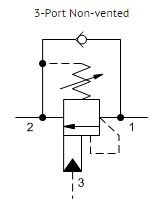

SUN HYDRAULICS 3:1 pilot ratio, semi-restrictive counterbalance valve (CBBCLHN)
£385.20
Counterbalance valves with pilot assist are meant to control an overrunning load. The check valve allows free flow from the directional valve (port 2) to the load (port 1) while a direct-acting, pilot-assisted relief valve controls flow from port 1 to port 2. Pilot assist at port 3 lowers the effective setting of the relief valve at a rate determined by the pilot ratio.
Other names for this valve include motion control valve and over-center valve.
- Counterbalance valves should be set at least 1.3 times the maximum load induced pressure.
- Turn adjustment clockwise to decrease setting and release load.
- Full clockwise setting is less than 200 psi (14 bar).
- Backpressure at port 2 adds to the effective relief setting at a ratio of 1 plus the pilot ratio times the backpressure.
- Reseat exceeds 85% of set pressure when the valve is standard set. Settings lower than the standard set pressure may result in lower reseat percentages.
Available on backorder
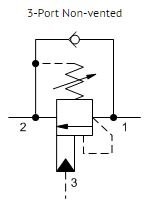
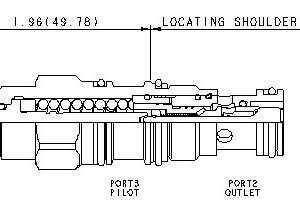
SUN HYDRAULICS 3:1 pilot ratio, standard capacity counterbalance valve (CBCALAN)
£406.80
Counterbalance valves with pilot assist are meant to control an overrunning load. The check valve allows free flow from the directional valve (port 2) to the load (port 1) while a direct-acting, pilot-assisted relief valve controls flow from port 1 to port 2. Pilot assist at port 3 lowers the effective setting of the relief valve at a rate determined by the pilot ratio.
Other names for this valve include motion control valve and over-center valve.
- Counterbalance valves should be set at least 1.3 times the maximum load induced pressure.
- Turn adjustment clockwise to decrease setting and release load.
- Full clockwise setting is less than 200 psi (14 bar).
- Backpressure at port 2 adds to the effective relief setting at a ratio of 1 plus the pilot ratio times the backpressure.
- Reseat exceeds 85% of set pressure when the valve is standard set. Settings lower than the standard set pressure may result in lower reseat percentages.
Available on backorder
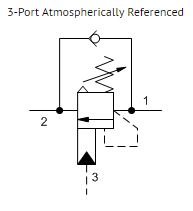

SUN HYDRAULICS 3:1 pilot ratio, vented counterbalance valve – atmospherically referenced (CACALHN)
£637.20
Atmospherically vented counterbalance valves with pilot assist are meant to control an overrunning load. The check valve allows free flow from the directional valve (port 2) to the load (port 1) while a direct-acting, pilot-assisted relief valve controls flow from port 1 to port 2. Pilot assist at port 3 lowers the effective setting of the relief valve at a rate determined by the pilot ratio. Backpressure at port 2 does not affect the valve setting because the spring chamber is atmospherically referenced.
Other names for this valve include motion control valve and over-center valve.
- Counterbalance valves should be set at least 1.3 times the maximum load induced pressure.
- Turn adjustment clockwise to decrease setting and release load.
- Full clockwise setting is 200 psi (14 bar).
- Approximately 1 drop (0,07 cc) of fluid will pass from the pilot area to the vented spring chamber every 4000 cycles.
Available on backorder
SUN HYDRAULICS 3:1 pilot ratio, vented counterbalance valve – atmospherically referenced(CAEALIN)
£918.00
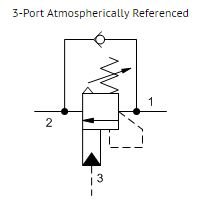
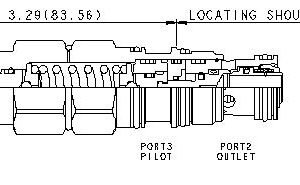
Atmospherically vented counterbalance valves with pilot assist are meant to control an overrunning load. The check valve allows free flow from the directional valve (port 2) to the load (port 1) while a direct-acting, pilot-assisted relief valve controls flow from port 1 to port 2. Pilot assist at port 3 lowers the effective setting of the relief valve at a rate determined by the pilot ratio. Backpressure at port 2 does not affect the valve setting because the spring chamber is atmospherically referenced.
Other names for this valve include motion control valve and over-center valve.
- Counterbalance valves should be set at least 1.3 times the maximum load induced pressure.
- Turn adjustment clockwise to decrease setting and release load.
- Full clockwise setting is 200 psi (14 bar).
- Approximately 1 drop (0,07 cc) of fluid will pass from the pilot area to the vented spring chamber every 4000 cycles.
Available on backorder
SUN HYDRAULICS 4-way, 2-position, pilot-to-shift, detented, directional valve (DCEDXHN)
£2,142.00
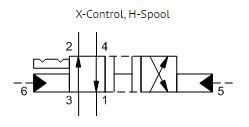
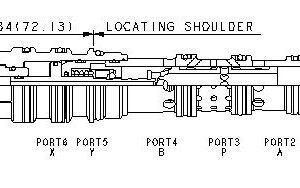
Two-position, detented, 4-way directional cartridges are 6-port directional valves that can be configured with up to 3 different spool options. The supply port is port 3 and all ports will accept 5000 psi (350 bar). Capacity for these pilot-to-shift valves is dependent on the spool type specified.
- All ports will accept 5000 psi (350 bar), including the x and y pilot ports (port 5 and port 6).
- Leakage listed in technical data is for each path.
- The pilot ports, 5 and 6, are positively sealed from the work ports.
- Hardened spool and sleeve provide consistent and low spool leakage rates and excellent wear characteristics.
- Incorporates the Sun floating style construction to minimize the possibility of internal parts binding due to excessive installation torque and/or cavity/cartridge machining variations.