
Available on backorder
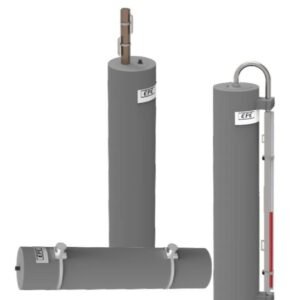
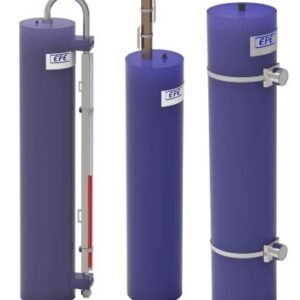
EPE STANDARD PISTON TYPE ACCUMULATORS (AP Series)
Send Inquiry - Sales@hydronexgen.com
A piston accumulator is a device used specifically for storage of liquid under pressure. As liquids, for all practical purposes, are incompressible, this objective is achieved by utilizing the compressibility of gases. A floating piston is fitted into the accumulator tube. An inert gas - nitrogen- is filled into the gas side through a pressure valve to a pressure P . The piston moves to the 0 bottom end, filling the entire volume V of the accumulator. 0 When the system pressure P is higher than the gas 1 precharge pressure P , the liquid enters the accumulator 0 and the piston is moved towards the gas side compressing and reducing the gas volume to V .1 Should the liquid pressure rise to P , the volume of gas 2 reduces to V with an attendant rise in pressure, thus 2 balancing the Liquid pressure. A potential energy is now stored in the accumulator to be utilized whenever needed.
Available on backorder
Sale
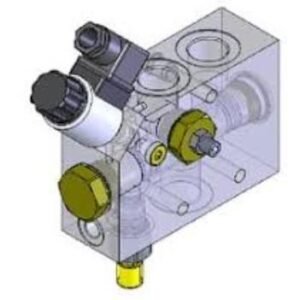
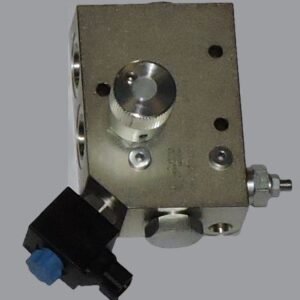
Flow Divider Valve for Rock Breaker
£1,058.40Features:
- Flow divider valve for Backhoe loader machine
- Pilot flow controller to reduce flow
- Flow merging from two or more pumps
- Spool valve for breaker application
- Hydraulic valves are available for various applications
- Flow divider valve for Backhoe loader machine; Pilot flow controller to reduce ... for breakerapplication.
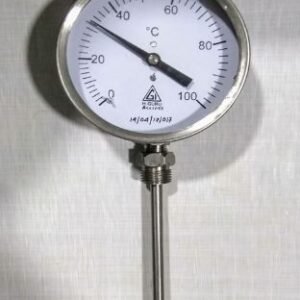
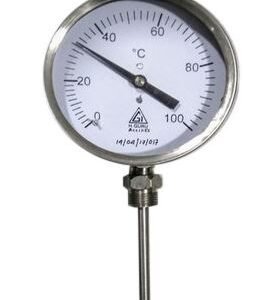
H GURU TEMPERATURE GAUGE (DIAL SIZE – 100 MM)
£43.20
These gauges are typically used in very harsh and highly corrosive environments. They are used in
chemical,fertilizer and petrochemical industries
Machine & apparatus construction
Chemical & petrochemical industries
Food stuff & beverage industries
Plastics & paper industries
H GURU TEMPERATURE GAUGE (DIAL SIZE – 100 MM)
£43.20
These gauges are typically used in very harsh and highly corrosive environments. They are used in
chemical,fertilizer and petrochemical industries
Machine & apparatus construction
Chemical & petrochemical industries
Food stuff & beverage industries
Plastics & paper industries
H GURU TEMPERATURE GAUGE (DIAL SIZE – 150 MM)
£54.00
These gauges are typically used in very harsh and highly corrosive environments. They are used in
chemical,fertilizer and petrochemical industries
Machine & apparatus construction
Chemical & petrochemical industries
Food stuff & beverage industries
Plastics & paper industries
H GURU TEMPERATURE GAUGE (DIAL SIZE – 150 MM)
£54.00
These gauges are typically used in very harsh and highly corrosive environments. They are used in
chemical,fertilizer and petrochemical industries
Machine & apparatus construction
Chemical & petrochemical industries
Food stuff & beverage industries
Plastics & paper industries
H GURU TEMPERATURE GAUGE (DIAL SIZE – 200 MM)
£82.80
These gauges are typically used in very harsh and highly corrosive environments. They are used in
chemical,fertilizer and petrochemical industries
Machine & apparatus construction
Chemical & petrochemical industries
Food stuff & beverage industries
Plastics & paper industries
H GURU TEMPERATURE GAUGE (DIAL SIZE – 200 MM)
£82.80
These gauges are typically used in very harsh and highly corrosive environments. They are used in
chemical,fertilizer and petrochemical industries
Machine & apparatus construction
Chemical & petrochemical industries
Food stuff & beverage industries
Plastics & paper industries

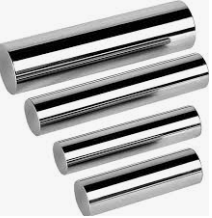
HARD CHROME PLATED PISTON RODS (SIZE-100mm) PER METER
£648.00
The piston rod is typically a hard chrome-plated piece of cold-rolled steel which attaches to the piston and extends from the cylinder through the rod-end head. In double rod-end cylinders, the actuator has a rod extending from both sides of the piston and out both ends of the barrel. The piston rod connects the hydraulic actuator to the machine component doing the work. This connection can be in the form of a machine thread or a mounting attachment. The piston rod is highly ground and polished so as to provide a reliable seal and prevent leakage.
HARD CHROME PLATED PISTON RODS (SIZE-110mm) PER METER
£766.80
The piston rod is typically a hard chrome-plated piece of cold-rolled steel which attaches to the piston and extends from the cylinder through the rod-end head. In double rod-end cylinders, the actuator has a rod extending from both sides of the piston and out both ends of the barrel. The piston rod connects the hydraulic actuator to the machine component doing the work. This connection can be in the form of a machine thread or a mounting attachment. The piston rod is highly ground and polished so as to provide a reliable seal and prevent leakage.
HARD CHROME PLATED PISTON RODS (SIZE-115mm) PER METER
£903.60
The piston rod is typically a hard chrome-plated piece of cold-rolled steel which attaches to the piston and extends from the cylinder through the rod-end head. In double rod-end cylinders, the actuator has a rod extending from both sides of the piston and out both ends of the barrel. The piston rod connects the hydraulic actuator to the machine component doing the work. This connection can be in the form of a machine thread or a mounting attachment. The piston rod is highly ground and polished so as to provide a reliable seal and prevent leakage.
HARD CHROME PLATED PISTON RODS (SIZE-120mm) PER METER
£997.20
The piston rod is typically a hard chrome-plated piece of cold-rolled steel which attaches to the piston and extends from the cylinder through the rod-end head. In double rod-end cylinders, the actuator has a rod extending from both sides of the piston and out both ends of the barrel. The piston rod connects the hydraulic actuator to the machine component doing the work. This connection can be in the form of a machine thread or a mounting attachment. The piston rod is highly ground and polished so as to provide a reliable seal and prevent leakage.